
Dentures Idaho Falls
Restore Your Smile and Enjoy Life to the Fullest

Dentures are perhaps one of the most iconic and recognizable forms of tooth replacement, and countless generations of patients have greatly benefitted from wearing these life-changing prosthetics. In fact, after they receive dentures to restore their smiles, patients often enjoy some of the best years of their lives! To learn more about how we can help you rebuild your smile and enhance your quality of life, give our Idaho Falls office a call today!
Why Choose Discover Family Dental for Dentures?
- Advanced Dental Technology Ensures Optimal Results
- Insurance Accepted and Financing Options Available
- In-House Dental Implant Restoration & Placement
Who's a Good Candidate for Dentures?
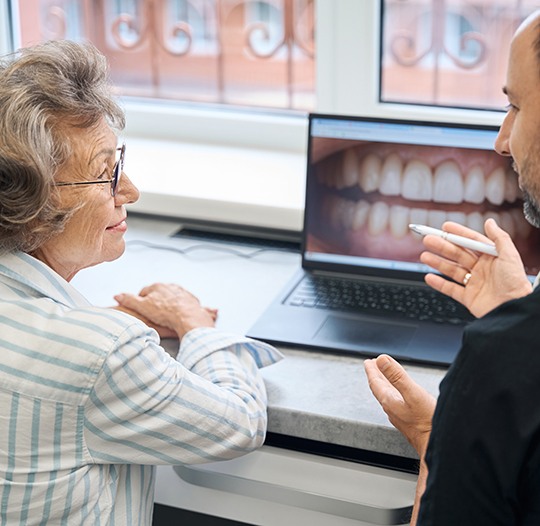
If you are missing several or all of your teeth, dentures might be just what you need to restore the function, beauty, and health of your smile! Dentures are removable oral appliances used to replace multiple missing teeth, and the easiest way to find out if you qualify for them is to schedule a consultation with our dedicated dentist, Dr. Tracy Jenkins. At your appointment, he can review your dental history, discuss your dental needs and goals, and determine the best way to restore your healthy, happy smile. If you aren’t ready to receive dentures yet, he may be able to address oral health issues with restorative treatments so you can get them later.
Effects of Missing Teeth

Tooth loss is a common problem that can occur due to accidents, oral infections, and genetic reasons, and it can lead to a number of undesirable consequences such as facial sagging, trouble with speaking and eating, and diminished self-esteem. Since it is often much harder to chew adequately with missing teeth, many people who are missing many pearly whites also deal with issues like malnutrition and indigestion. Tooth loss also deprives the jaw of the stimulation it needs to stay healthy and strong, which can cause its bone structure to atrophy and pull adjacent teeth out of alignment.
What Qualifies You for Dentures?

Dentures may be an excellent option if you have lost many teeth or deal with severe dental sensitivity or tooth decay as long as you have adequately healthy gums and jawbones. People who receive dentures must also commit to practicing excellent oral hygiene and appliance maintenance habits.
The right type of denture for you mostly depends on how many teeth you are missing. Partial dentures can replace one or several missing teeth while a full denture can replace an entire lost arch. If you’re looking for maximum chewing power, implant dentures may be the best option for you. Dentures are also often more affordable than other restorations, which can make them excellent for patients on a budget.
Alternative Tooth-Replacement Options
Dentures aren’t right for everyone, so some patients will be better served by other tooth replacement options. We offer:
- Dental bridges: These appliances can replace one or several sequential missing teeth, and they are held in place by dental implants or crowns placed on healthy teeth on either side of the gap.
- Dental implants: While these surgically placed appliances are more costly than traditional dentures, they offer a permanent solution that exerts superior chewing power.
Types of Dentures

There are three kinds of dentures: partial dentures, complete (full) dentures, and implant dentures. Our dentist will discuss each type with you at your appointment to help you decide which one is best for you. In the meantime, you can read on to learn more about them!
Partial Dentures
A partial denture is used if you are missing multiple teeth but have remaining natural teeth. It is secured in place with a thin framework or clasps that attach to the natural teeth for a secure fit. Each replacement tooth is custom-made to ensure they don’t draw any unwanted attention to your smile either.
Full Dentures
A complete or full denture is used to replace all of the teeth in an arch. We may suggest this type of denture to replace all of the teeth in both arches or just one, depending on your individual needs. It’s held in place with natural suction, denture adhesive, or a mixture of the two, which ensures it doesn’t move when you chew, speak, or laugh.
Implant Dentures
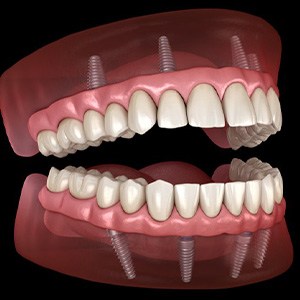
Implant dentures are where tried-and-true dentures and state-of-the-art dental implants meet. As a result, patients who choose this tooth-replacement solution enjoy several benefits, including the fact that they help prevent bone loss, they preserve your youthful face shape, and they can last for well over a decade with proper care.
The Benefits of Dentures

For decades now, patients have chosen to face tooth loss head-on with dentures. If you’re considering doing the same, then you might find it helpful to learn why they continue to be a tried-and-true tooth-replacement solution. Fortunately, this next section is dedicated to the noteworthy benefits that they come with!
They Can Restore the Strength of Your Bite

Following tooth loss, have you resorted to eating a soft foods diet? If so, you know that eating the same soft, bland foods on repeat can be quite boring. Not only that, but it makes it difficult to get all of the vitamins, minerals, and nutrients that your body needs to thrive. That’s where dentures come in! They can fill the gaps in your smile or give you an entirely new arch of teeth, restoring some of the strength in your bite that you lost.
They Are Highly Customizable

Oftentimes, patients assume that their dentures won’t look or feel lifelike. That’s not the case at all! Every aspect, from the gum-colored base to the replacement teeth, is custom-made with your face shape, dental needs, and smile goals in mind. So, you don’t have to worry – your restoration won’t draw any unwanted attention to your smile.
They Help Prevent Dental Drift
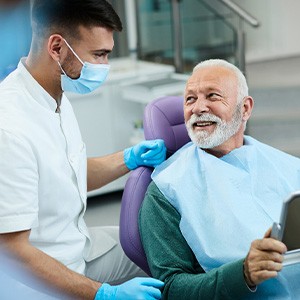
If you haven’t heard of dental drift before, it’s when the teeth surrounding the gap begin to move into the open space. Although this may seem inconsequential, it can actually lead to several serious issues, including premature wear and chronic jaw pain. The good news is that we can prevent that from happening with partial dentures in Idaho Falls!
They Are Cost-Effective

Sometimes, patients experience a bit of sticker shock when they get an estimate of the price of dental implants. If that’s how you felt, then you’ll be happy to hear that dentures are usually more cost-effective. Not only that, but many dental insurance providers cover a portion of the price. So, if you’re insured, your out-of-pocket expenses may be even lower.
They Can Replace a Large Number of Missing Teeth

If you are only missing one tooth, then a dental bridge or implant is ideal. However, if you are struggling with moderate to severe tooth loss, there’s nothing quite like dentures. While partial dentures can replace any gaps in your smile while preserving the alignment of your natural teeth, full dentures can replace an entire arch!
They Are Easy to Maintain

Finally, you don’t need to buy expensive cleaning products or adopt a cumbersome oral hygiene regimen to keep your dentures in pristine condition. Just brush them after each meal to remove food particles, plaque, and other debris from the nooks and crannies. Then, before you go to bed at night, place them in a clean container filled with water or a dentist-approved cleanser.
Dentures Aftercare

Congratulations on restoring your beautiful smile with durable, lifelike dentures in Idaho Falls! While we know you’re eager to begin using your new prosthetics to enjoy a wide variety of delicious nutritious foods, speak clearly, and smile confidently, it’s important to understand how to properly care for them so they look and feel their best for as long as possible. One of the most important ways to do this is to continue visiting Dr. Jenkins every six months for your regular checkups and cleanings. In fact, even if you have just a few or no remaining natural teeth, it’s still important to have your smile examined regularly, as wearing dentures can make it harder to notice small changes in your mouth that could indicate dangerous conditions like periodontal disease or oral cancer.
Removable Dentures
Keep Your Dentures Safe
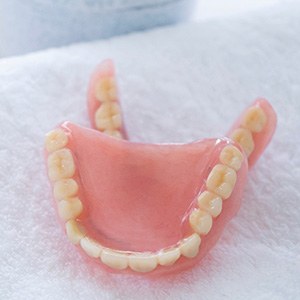
One of the leading causes of denture damage is accidentally dropping them when taking them out for cleaning or soaking. To lessen the risk of them breaking if this occurs, be sure to always line your countertop with a towel and fill the basin of your sink with water before removing them. When you’re not wearing them, keep your dentures safe by storing them away from young children and pets.
Remove After Eating
To ensure that your new dentures always look and feel their best, it’s important to keep them clean. Be sure to remove them completely from your mouth after each meal and rinse them well. While this may seem like a lot of effort, doing so regularly will greatly reduce the accumulation of buildup and plaque on the prosthetics themselves. Please also note that when cleaning and soaking them, it is important to use only cool or lukewarm water, as hot water can warp or crack them and change how they fit.
Clean Your Restoration
Dentures in Idaho Falls should be removed completely from your mouth before cleaning. Be sure to always brush them using a soft-bristled toothbrush. You can scrub them gently with mild dish soap, unscented hand soap, or a cleanser designed specifically for dentures, but never use regular toothpaste, as it is too abrasive and could permanently scratch them.
If you don’t need to wear your restorations again for a while, be sure they’re stored properly by submerging them in either water or a denture soak. If they dry out, it can cause them to warp or crack, leading to costly repairs.
Be sure to rinse your dentures well before returning them to your mouth, as the products designed to keep them clean weren’t meant for human consumption.
Remove When You Sleep
Beyond the first 24 hours, it is important to remove your dentures every night while you sleep and leave them soaking in either water or denture soak until you’re ready to wear them again. That’s because continuous wear reduces the circulation in your gum tissue and can cause painful denture sores and irritation. Studies have also shown that sleeping in prosthetics increases plaque levels in the mouth and could even raise your risk of pneumonia.
Notice Changes
Wearing dentures in Idaho Falls regularly can make it difficult to spot changes in your mouth, but if you do notice any abnormalities including redness, swelling, irritation, or sores, notify Dr. Jenkins as soon as possible.
Should you accidentally break your dentures, never attempt to repair them yourself. Instead, call us as soon as possible and we’ll schedule you for an emergency visit. If your prosthetics begin to fit differently or click or shift when in use, let us know, as they may require a reline or replacement.
Implant Dentures
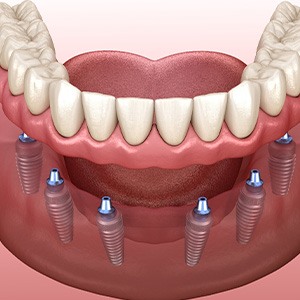
Although many types of implant dentures in Idaho Falls don’t need to be removed for cleaning like traditional dentures do, these prosthetics still require special care to keep them looking and feeling their best.
Be sure to brush your restorations twice a day with a soft-bristled toothbrush and non-abrasive toothpaste. We recommend a gel-based formula free of stain removing ingredients or baking soda additives.
Be sure to floss between each tooth and underneath your denture every day. If you have trouble reaching beneath them, floss threaders are available at most discount stores and pharmacies, or you can try using a water flosser to gently loosen debris. Sulcus brushes may also be helpful to have on hand to clear away particles from those tight spaces between your gums and your prosthetic.
Finally, add an antibacterial mouthwash to your daily oral hygiene routine if you don’t already use one. These rinses will help keep tartar and oral bacteria at bay and ensure your restoration looks clean and smells fresh between dental visits.