
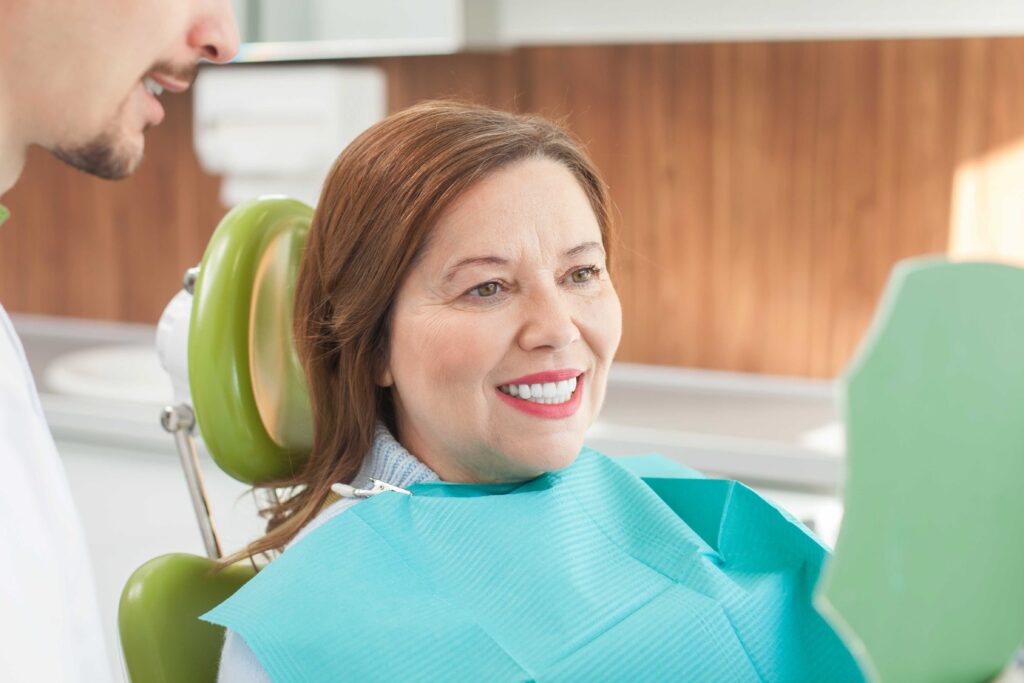
Menopause is a natural part of getting older. As you likely already know, there are plenty of hormonal changes to be expected. This affects numerous parts of your body, including your teeth. If you are missing teeth and thinking about getting dental implants, you may be wondering if it is a viable option for post-menopausal women. Read on to learn more about how menopause impacts oral health and the dental implant process.
How Does Menopause Affect Your Smile?
Menopause can influence your smile in several ways. Here are some changes that women experience.
- Gum Disease: The hormonal changes that take place during menopause can increase the blood flow to the gums. This makes the tissue swollen and more susceptible to plaque buildup and gum disease. When left untreated, gum disease can result in gum recession, jawbone deterioration, and tooth loss.
- Jawbone Loss: Estrogen levels decrease during and after menopause. Since this hormone plays an important role in bone health, post-menopausal women may be at higher risk of osteoporosis.
- Dry Mouth: Dr mouth is another common side effect of menopause. When the mouth doesn’t produce enough saliva, food debris and harmful bacteria are left behind, therefore increasing our risk of gum disease and tooth decay.
Can Post-Menopausal Women Get Dental Implants?
Yes! However, it is important to note that there are all sorts of factors that play a role in the success of dental implants. Just because you are post-menopausal doesn’t necessarily mean that you won’t make a good dental implant candidate. By taking all of the right precautionary steps, the odds are in your favor.
During your dental implant consultation, you will discuss your dental and medical history to determine if you are a good candidate for the procedure. If you need an preliminary treatments, like gum disease treatment or a bone graft, these will be arranged beforehand to give your dental implants the best chance of success. After your implants have been placed, you can keep them healthy by maintaining an excellent oral hygiene routine and refraining from bad dental habits, like smoking and using your teeth as tools.
Menopause shouldn’t keep you back from getting dental implants. By scheduling a consultation with your dentist and working with them, you can put together a plan that is right for you!
About the Author
Dr. Tracy D. Jenkins earned his dental doctorate from the Indiana University School of Dentistry. Since then, he has been committed to continuing education and gained extensive dental implant training at the White Capp Institute Center for Dental Implant Training. To learn more about dental implants or to schedule a consultation, visit his website or call (208) 522-8061.